Pecan carpenter ants (Camponotus species) do not consume cellulose like subterranean termites; instead, adult workers excavate smooth, sandpaper-clean galleries within structural framing, roof fascias, and landscape…
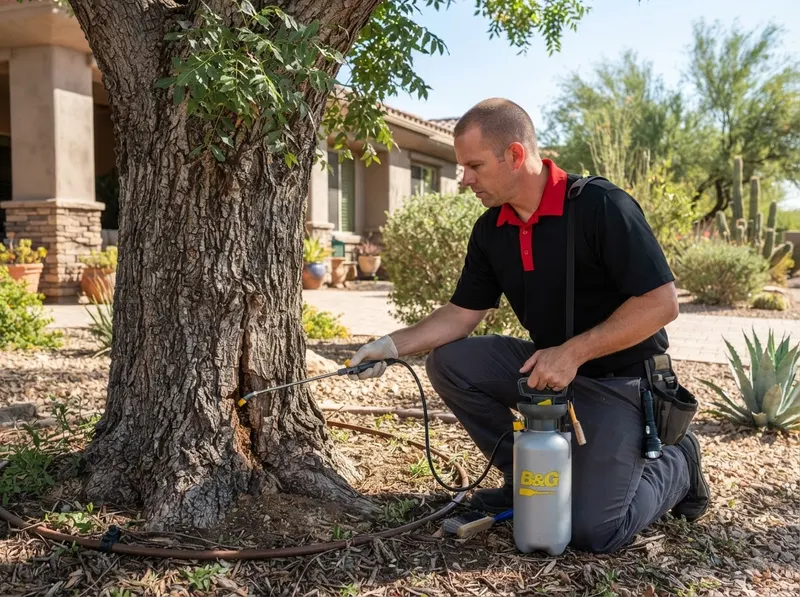
Pecan carpenter ants (Camponotus species) do not consume cellulose like subterranean termites; instead, adult workers excavate smooth, sandpaper-clean galleries within structural framing, roof fascias, and landscape timbers to house secondary satellite colonies. In desert environments like Troon North, Silverleaf, and DC Ranch, these ants exploit moisture differentials caused by outdoor irrigation systems, air-conditioning condensation lines, and microclimates around pecan, mesquite, and ironwood trees. Property owners often mistake the fine, sawdust-like frass, which contains insect body fragments rather than mud tubes, for drywood termite damage. When colonies establish inside architectural structural posts, hollow decorative beams, or foam insulation panels, structural integrity weakens progressively without exterior surface indicators.
Effective defense requires an authoritative, non-repellent approach rather than generic perimeter barrier sprays. Standard repellent pyrethroids scatter carpenter ant colonies, triggering sub-nest budding into interior drywall voids throughout properties in Gainey Ranch and McCormick Ranch. Structural control relies on microencapsulated non-repellent transfer chemistry, including fipronil or dinotefuran formulations, paired with direct wall-void aerosol injection containing precision active ingredients. If interior moisture is localized to a roof leak near Pinnacle Peak or South Scottsdale plumbing chases, a targeted non-repellent barrier halts satellite activity within 7 to 14 days; if pervasive outdoor master nests remain untreated in mature native trees, whole-perimeter non-repellent drenching and targeted canopy injections are required to isolate the home permanently.
Pecan carpenter ant eradication differs fundamentally from general perimeter maintenance. General insect knockdowns address surface crawlers on turf or concrete pads, whereas wood-destroying ant treatment requires direct tracking of foraging trails, detection of frass drop zones, and deep-gallery microencapsulation. The operational protocol involves: (1) mapping night-active foraging routes between interior structures and exterior desert landscape features; (2) applying non-repellent systemic actives directly into satellite galleries using low-pressure void injectors; (3) treating landscape tree cavities within 50 feet of the foundation; and (4) executing a 3-foot vertical and 10-foot horizontal microencapsulated exterior foundation barrier safe for perimeter vegetation and non-target organisms once dry.
Every job gets a firm, written price after a free on-site visit.
Tell us about your pecan carpenter ant treatment job in Scottsdale and we'll send a clear, written quote, usually the same day.
 Millstone Pest Control